


News
Tendinitis Myths vs Truth: Learn the Facts to Expedite Your Recovery
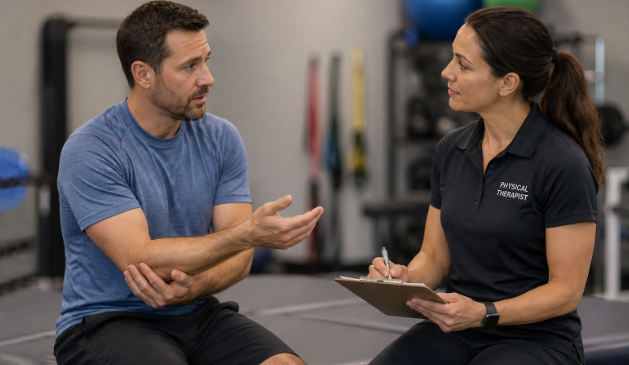
Tendon pain can develop almost anywhere in the body, from the shoulder and elbow to the knee and ankle. It may also begin after a sudden increase in activity, build gradually over time, or linger long after the original irritation. Because tendons are involved in nearly every movement our bodies make, even mild tendinitis can affect work, exercise, sleep, and day–to–day functioning.
But unfortunately, many individuals who are dealing with tendinitis will receive inaccurate information or advice without realizing it. Social media, outdated recommendations, and well–meaning friends are all sources of claims related to rest, imaging, and treatment that are not based on facts. These misconceptions can slow recovery, increase fear of movement, or lead people toward unnecessary procedures if they are not exposed to the truth.
Physical therapy is widely considered one of the most effective and safest treatments for many forms of tendinitis. Through targeted strengthening, mobility work, and education, physical therapy helps restore tissue capacity and improve how the body handles load. Understanding what the evidence actually shows can help you recover more efficiently and avoid common setbacks.
Below are several widespread myths about tendinitis across the body, followed by what current research and clinical experience actually says.
Myth 1: “Ice and pain medications will adequately address my symptoms”
Ice and anti–inflammatory medications can temporarily reduce pain, especially during an acute flare–up. However, relying on them alone will not address the underlying issue. Many tendon problems are not primarily inflammatory after the early phase. Instead, they often involve changes in how the tendon handles load.
Short–term symptom relief can be helpful, but long–term recovery typically requires:
- Gradual strengthening
- Load management
- Movement retraining
- Addressing contributing factors like weakness or stiffness
Using ice or medication without restoring tendon strength may reduce discomfort temporarily but often does little to prevent symptoms from returning.
Myth 2: “Once tendon pain starts, I'll just have to wait it out”
Some people assume tendinitis will eventually resolve on its own if they simply avoid the activity that caused it. While symptoms may settle temporarily, the tendon often remains sensitive to load if strength and tolerance are not rebuilt.
For example:
- Shoulder tendinitis may persist if overhead strength isn't restored
- Patellar tendon pain can return when jumping or squatting resumes
- Elbow tendinitis may flare again with gripping or typing
Active rehabilitation helps tendons adapt so they can handle daily demands again. Not doing anything but waiting for the pain to improve may prolong recovery or lead to recurring symptoms.
Myth 3: “Tendon injuries only happen after injuries”
Many people expect tendon pain to follow a clear incident, such as lifting something heavy or twisting awkwardly. In reality, tendinitis develops gradually in many cases. Small increases in activity, changes in routine, or repetitive movements over time can overload a tendon even without a single dramatic event.
Common factors that gradually contribute to tendinitis include:
- Increasing running mileage too quickly
- Starting a new exercise program
- Repetitive work tasks
- Returning to activity after time off
- Weakness in surrounding muscles
Because onset is often subtle, people may not realize a tendon has been overloaded until pain becomes persistent.
Myth 4: “Wearing a brace or support alone can solve my problem”
Braces, straps, and taping can sometimes reduce the strain on an irritated tendon and make activity more comfortable. However, these should be seen as short–term tools rather than long–term solutions.
If the underlying issues with strength, mobility, or movement are not addressed, symptoms often return once the support is removed.
For instance:
- A tennis elbow strap may reduce discomfort but won't strengthen the forearm
- A knee strap may help temporarily but won't resolve patellar tendon overload
- Shoulder supports do not restore rotator cuff strength
Supportive devices can be useful during recovery, but long–term improvement usually comes from restoring tissue capacity and movement quality.
Myth 5: “If a treatment does not work quickly, nothing will”
Tendons typically recover more slowly than muscles. It's common for meaningful improvement to take several weeks, and full recovery can take a few months depending on severity and duration of symptoms.
Because progress can be gradual, people sometimes try multiple quick–fix treatments in search of immediate relief. However, consistent, progressive rehabilitation tends to produce the most reliable long–term results.
Improvements usually occur in stages:
- Reduced pain with daily activities
- Improved strength and tolerance
- Return to higher–level activity
- Reduced risk of recurrence
Patience and consistency are key factors in successful tendon recovery.
Follow the Facts and Take the Next Step
Misinformation about tendinitis can lead to unnecessary fear, delayed treatment, or overly aggressive interventions. In reality, most tendon conditions respond well to education, gradual loading, and individualized rehabilitation.
Physical therapy helps people understand what is happening in the affected tissue, how to manage activity, and how to safely regain strength and physical function.
If you are dealing with tendon pain in the shoulder, elbow, knee, ankle, or anywhere else, we strongly encourage you to schedule an evaluation with one of our physical therapists. A thorough assessment can identify contributing factors and create a personalized plan to help you return to daily activities with greater comfort and confidence.
Contact our clinic today to schedule an appointment and start moving toward recovery with a plan based on evidence, not myths.
References and Further Reading
May 12, 2026
Disclaimer:
The information in the articles, posts, and newsfeed is intended for informational and educational purposes only and in no way should be taken to be the provision or practice of physical therapy, medical, or professional healthcare advice or services. The information should not be considered complete or exhaustive and should not be used for diagnostic or treatment purposes without first consulting with your physical therapist, occupational therapist, physician or other healthcare provider. The owners of this website accept no responsibility for the misuse of information contained within this website.
